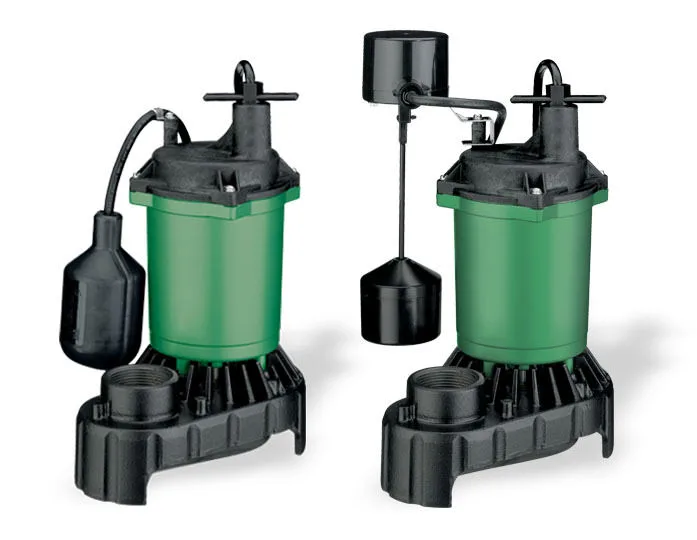
Sump vs Sewage vs Effluent Pump Selection
Most failed Hydromatic pump selection jobs start the same way: someone ordered a sump pump for a toilet, or a sewage ejector for a filtered mound. Horsepower does not tell you which one you need. The sphere size the impeller will pass does. If the solids in the pit are larger than that sphere, the pump clogs, trips, or burns the seal. If they are much smaller and you bought a 2 inch sewage pump anyway, you paid for a hydraulic you do not need and often a basin you cannot fit.
We stock the four wastewater brands contractors actually pull: Hydromatic, Barnes, Goulds Water Technology, and Myers. The type tree on this site splits the same way the literature does: sump, effluent, and sewage, under Submersible, Sump and Solids Handling. Application pages live under Wastewater, Sewage and Drainage.
This guide is the selection path we use on the phone: name the liquid and the solids, size the basin and the head, pick the switch, then match a current series. If you already have a dead pump, skip to the nameplate steps and we will cross it.
Name the Liquid and the Solids
Clear drain water, filtered septic effluent, or raw sewage with 2 inch solids. That decision is the pump type. Everything else is sizing.
Size Basin, Head, and Flow
Measure the pit, compute total dynamic head, and set GPM from the inflow, not from the largest horsepower on the shelf.
Pick the Switch, Then the Series
Tethered, vertical, or diaphragm, and whether it is piggyback. Then match Hydromatic, Barnes, Goulds, or Myers to the duty.
The Three-Way Split: Solids Sphere Size
Manufacturers publish a maximum spherical solid, not a marketing category. A sump pump is built for drain water and small debris. An effluent pump is built for septic liquor and gray water after the solids have settled. A sewage pump is built to pass the solids a toilet puts in the pit. The table below uses published sphere sizes from the current sheets we host, confirmed on catalog rows where the same figure is stored.
Solids: 3/16 in to 1/2 in
Liquid: Basement drain water, dewatering, light debris. Not toilets.
Examples: Hydromatic HP33/HP50: 1/2 in (datasheet + catalog HP33). Goulds LSP03/LSP07: 3/8 in spherical (BLSP03). Myers MS33/MS50: 1/4 in (MS datasheet).
Solids: 3/4 in typical; 1/16 in on filtered high-head
Liquid: Domestic effluent and drain water after a septic tank. Mounds, trenches, dosing.
Examples: Hydromatic SHEF and Goulds WE 3885: 3/4 in (sheets + catalog). Barnes STEP-DS: 3/4 in spherical. Myers ME: 3/4 in. Hydromatic HE filtered: 1/16 in (HE datasheet).
Solids: 2 in typical; 2-1/2 in on some 3 in ejectors
Liquid: Raw residential or light commercial sewage. Toilets, lift stations, trashy solids.
Examples: Hydromatic SK, Goulds WS 3886, Myers MW, Barnes Atlas sewage and 3SEV-L: 2 in. Hydromatic S3S/SB3S: 2-1/2 in (S3S datasheet + catalog S3S150M3-4).
Sphere sizes are maximum spherical solids from the cited manufacturer sheets. Hydromatic HS Series datasheet lists 3/16 in; the HS33T1 catalog row lists 1/4 in. Use the sheet on the series page when those two disagree.
Sewage pump
Buy this when a toilet, floor drain with paper, or raw basin can put 2 inch solids into the pump. Goulds WS 3886 (B3886) and Myers MW both state 2 inch spherical solids and a 2 inch NPT discharge. Hydromatic SK is the same 2 inch solid on a 2 inch NPT (3 inch optional). Barnes 3SEV-L is a 3 inch NPT vortex sewage pump rated for 2 inch spherical solids.
Do not drop a 3/4 inch effluent pump into that pit and hope.
Effluent pump
Buy this when the tank or filter has already dropped the big solids. Goulds WE 3885 (B3885) and Hydromatic SHEF publish 3/4 inch solids. Myers ME is written for effluent pressure distribution mounds and trenches at the same 3/4 inch sphere. Barnes STEP-DS is the septic-tank effluent version of that duty (3/4 inch spherical, 2 inch NPT, 104 F continuous).
High-head filtered effluent (Hydromatic HE) is a different hydraulic: 1/16 inch sphere, heads to 480 ft on the HE datasheet.
Gray-zone pumps are not a third category
Hydromatic OSP50 is sold as a sump/effluent pump with 5/8 inch solids and a 1-1/2 inch NPT discharge (OSP50 datasheet, confirmed on catalog OSP50A1 10). Hydromatic HP33/HP50 literature lists basement sumps, dewatering, and light effluent at 1/2 inch solids. Those models can move dirty water. They cannot replace a 2 inch sewage ejector on a toilet.
If the force main is long and the solids cannot be 2 inch spheres, look at a grinder instead of forcing a sewage ejector. That is a different impeller and a different curve. Do not size a grinder from this table.
Sewage Pump Sizing: Basin, Head, and GPM
Sewage pump sizing is three numbers, in this order: the basin the switch can live in, the total dynamic head at the discharge, and the GPM the fixtures actually dump. Pick horsepower last. The curve will tell you HP once the duty point is on it.
Basin diameter is a switch constraint
A tethered float needs room to swing. A vertical switch does not. That is why the same 1/3 HP sump has two minimum pit sizes on the sheet.
Hydromatic HP33/HP50 (HP datasheet)
Basin: 10 in
Why: 2-pole switch, On 9 in / Off 4 in
Hydromatic HS Series (HS datasheet)
Basin: 10 in vertical, 14 in tethered
Why: Vertical On 7.5 in / Off 3 in; tethered On 14 in / Off 5 in
Myers MS33/MS50 (MS datasheet)
Basin: 10 in vertical, 14 in tethered
Why: Same On/Off pair as Hydromatic HS: 7.5/3 in vertical, 14/5 in tethered
Goulds LSP03/LSP07 (BLSP03)
Basin: 12 in automatic, 9 in manual
Why: Piggyback vertical On 8.5 in / Off 2 in; wide-angle On 11 in / Off 5 in (LSP03). Catalog LSP0311 (manual) stores 9 in, matching the sheet.
Myers ME effluent and MW sewage (ME / MW datasheets)
Basin: 24 in simplex, 36 in duplex
Why: These are 2 inch discharge effluent and sewage pumps, not 1-1/2 inch cellar sumps. Plan the basin package before you order the pump.
Total dynamic head
TDH is the resistance the pump must overcome at the duty GPM: static lift from the off level to the discharge elevation, friction in pipe, fittings, the check valve, and any pressure at the outlet (a pressurized tank or a long force main).
TDH (ft) = static lift (ft) + friction (ft) + pressure head (ft) | Head (ft) = PSI x 2.31 (water, specific gravity 1.0) | PSI = Head (ft) / 2.31
The 2.31 factor is the standard U.S. conversion for water at SG = 1.0, the same basis Goulds wastewater sheets use (clear-water curves at 70 F on Hydromatic SHEF/OSP performance notes). If the liquid is heavier than water, divide by specific gravity before you plot.
GPM: size to inflow, then read the curve
For a cellar sump, GPM is the inflow you have to empty before the next rain or the next appliance dump. For sewage, GPM is the fixture dump into that basin, not a wish. Oversizing so it 'never struggles' is how you get a 2 HP sewage pump that short-cycles in a basin the switch cannot use and glazes the seal.
Published flow is a family envelope
Goulds WE 3885 (B3885 + catalog WE rows): up to 140 GPM, heads to 128 ft TDH, 3/4 in solids, 2 in NPT. Goulds WS 3886 (B3886 + catalog WS0311B): up to 185 GPM, heads to 38 ft TDH, 2 in solids. Those are series maxima. Your duty is one point on one curve.
Plot TDH at the GPM you need
Hydromatic SHEF and OSP performance notes say the printed curves are clear water at 70 F, and they recommend operating inside the bounded area of the curve. If your duty sits off the right side, you need more impeller or a different series, not a bigger motor on the same hydraulic.
Before you compare models
This is the list we ask for on a quote. Missing any of it is how a 1/2 HP sump gets ordered for a 2 inch sewage basin.
Switch Types: Tethered, Vertical, Diaphragm, Piggyback
The switch is how the pump knows the pit is full. The four brands on this site publish mechanical tethered (wide-angle) floats, vertical floats, and diaphragm / pressure switches. Piggyback is not a third float geometry. It is how the switch is wired: the float has its own plug, the pump plugs into the back of that plug, and you can pull the switch and run the pump by hand without fishing it out of the basin.
Tethered / wide-angle
Use when: Basin is wide enough for the float to swing. Simple, cheap, easy to replace.
Watch: Needs more diameter. Hydromatic HS and Myers MS both want 14 in for the tethered option.
Source: HS datasheet (tethered On 14 in / Off 5 in). Goulds LSP 'AT' piggyback wide-angle (BLSP03). Catalog styles: Tethered, Wide Angle, Wide Angle Float Switch.
Vertical
Use when: Tight pits. The float rides a rod instead of swinging.
Watch: Debris can hang the rod. Confirm the On/Off pair still matches your inflow.
Source: HS and Myers MS: 10 in min basin, On 7.5 in / Off 3 in. Goulds LSP 'AV' piggyback vertical (BLSP03). Catalog: Vertical, Piggyback Vertical, Automatic Vertical.
Diaphragm / pressure
Use when: Smaller pits where a tether would hang, or a sewage ejector with a factory auto option.
Watch: The diaphragm sits in the water. Grease and paper can stick it. Hydromatic SK50 auto uses a non-clog diaphragm switch (SK datasheet).
Source: OSP50: piggyback pressure diaphragm (OSP50 spec section 9.01). Catalog: Diaphragm, Piggy Back Diaphragm.
Piggyback (wiring)
Use when: You want to test the pump without pulling it, or swap a failed switch without replacing the pump.
Watch: Piggyback is available on tethered, vertical, and diaphragm models. It is not a float type by itself.
Source: Hydromatic HS 'piggy-back style float'. SHEF50/100: tilt-sensitive wide-angle with piggyback plug (SHEF spec 9.01). Myers MW '*P' automatic rows are piggyback (MW ordering table). Goulds LSP AT/AV.
Catalog float-switch-style values on pump-catalog products include tethered, vertical, diaphragm, and piggyback variants. No row with 'electronic' in that field was found in the dev catalog on 2026-08-30.
Electronic level control is usually a panel, not a pump option
The Hydromatic, Barnes, Goulds, and Myers sump/sewage/effluent sheets cited in this guide specify mechanical floats or a diaphragm. When a job needs probes or an adjustable electronic control, that lives on the panel side. Myers publishes an ALC adjustable level control manual in the library (documents/myers-alc-adjustable-level-control-manual.pdf). Do not assume a pump-mounted 'electronic switch' SKU unless the nameplate or the current series sheet says so.
Hydromatic Pump Selection on This Site
Hydromatic pump selection is the query this page is built to answer. The Hydromatic brand node is live (4,660 products in the dev catalog). Start with the duty, then open the series. The figures below are from the Hydromatic sheets in our library, dual-checked on catalog rows where noted.
HP33 / HP50
Duty: Cast iron cellar sump
Specs: 1/3 and 1/2 HP. 48 GPM (HP33) and 62 GPM (HP50). Shut-off to 32 ft. 1/2 in solids. 1-1/2 in NPT. 10 in min pit. 130 F continuous. 2-pole switch.
Open: HP33 HP50
HS33 / HS50
Duty: Residential sump, piggyback
Specs: 1/3 and 1/2 HP PSC. Capacities 70 GPM. Shut-off 24 ft. 3/16 in solids on the HS datasheet. Wide-angle or vertical. 140 F continuous. 1-1/2 in NPT.
Open: HS33 HS50
SHEF 30/40/42/45/50/100
Duty: Cast iron effluent
Specs: 3/4 in solids (brochure + SHEF50/100 datasheet + catalog SHEF100A2 20). SHEF45: up to 87 GPM, shut-off to 44 ft (effluent brochure). SHEF50/100: 2 in NPT, 3450 RPM, 140 F, piggyback wide-angle.
Open: SHEF
HE8 through HE50
Duty: High-head filtered effluent
Specs: Capacities to 72 GPM. Heads to 480 ft. Max spherical solid 1/16 in. Max liquid 122 F. 1-1/4 in or 2 in NPT by model. HE datasheet only (not re-stated as a series max on the catalog sample we pulled).
Open: HE
OSP50
Duty: Sump / effluent gray zone
Specs: 1/2 HP, 1750 RPM, 1-1/2 in NPT, 5/8 in solids, 140 F. Piggyback diaphragm. Datasheet + catalog OSP50A1 10.
Open: OSP
SK 50/60/75/100
Duty: Sewage ejector
Specs: 2 in solids, 2 in NPT std (3 in opt). 1/2, 6/10, 3/4, and 1 HP. SK50 auto: non-clog diaphragm. SK60 auto: wide-angle float. SK datasheet + catalog SK100M2 20.
Open: SK
S3S / SB3S
Duty: 3 in sewage ejector
Specs: 3 in discharge, 2-1/2 in solids, 140 F max liquid, semi-open 2-vane impeller. S3S datasheet + catalog S3S150M3-4.
Open: S3S SB3S
Hydromatic also publishes SKHS, SKV, SP, S3SD/S4SD, and the HPE / HPS solids-handling lines on this site. If the nameplate is one of those, search the model on the Hydromatic page or send it. Do not assume SK numbers apply to an S4SD.
Barnes, Goulds, and Myers Lineups We Stock
Same three-way split, three more catalogs. Use the brand page when you already know the manufacturer. Use the type page when you only know the duty.
Barnes (Crane Pumps & Systems)
The Barnes brand node is live. For effluent vs sewage in one family, start with Atlas. The Atlas brochure states 2 inch spherical solids on the sewage-ejector models, cast iron construction, oil-filled motor, and a quick-disconnect cord; it does not print an effluent solids figure (its effluent offerings are listed as pending). The 0.75 inch solids on Atlas effluent models is a catalog-row value, and catalog SKU 149931 stores 2 inch solids and a series range of 240 GPM and 90 ft. The brochure we pulled does not print a GPM or head maximum either, so treat 240/90 as the catalog envelope and confirm the exact curve on the model.
STEP-DS is the septic-tank effluent pump: 3/4 inch spherical solids, 2 inch NPT female vertical, 104 F continuous, 0.5 and 1 HP at 3450 RPM, tandem mechanical seal, polypropylene enclosed impeller (STEP-DS datasheet). 3SEV-L is the vortex sewage pump: 2 inch spherical solids, 3 inch NPT, 104 F continuous, 0.5 / 0.75 / 1.0 HP at 1750 or 3450 RPM, designed for typical raw sewage (3SEV-L datasheet). We did not find a dedicated 3SEV series url_path in the brand tree, so open those models from Barnes or ask us to pull the SKU.
Goulds Water Technology
Three sheets cover most residential and light-commercial calls on Goulds:
- LSP03 / LSP07 sump (BLSP03 + catalog LSP0311): 1-1/2 in NPT, to 57 GPM, 34 ft TDH, 3/8 in spherical solids, 104 F max liquid. 1/3 HP (LSP03) and 3/4 HP (LSP07). Switch codes: A built-in wide-angle, AT piggyback wide-angle, AV piggyback vertical, blank = manual.
- 3885 WE effluent (B3885 + catalog WE rows): 3/4 in solids, 2 in NPT, up to 140 GPM, up to 128 ft TDH, 104 F continuous / 140 F intermittent. 1/3 to 2 HP. Silicon carbide vs silicon carbide seal.
- 3886 WS sewage (B3886 + catalog WS0311B): 2 in solids, 2 in NPT, up to 185 GPM, up to 38 ft TDH, same 104/140 F pair. 1/3 to 1 HP at 1750 RPM on the B3886 model table.
Goulds also lists WE's higher-head siblings (WS BF 3887, WS BHF 3887, WS D3/D4 3888) and other effluent/sump series (GEP, GFE, PE, GSP) under the Goulds tree. If the nameplate is 3887 or 3888, do not size it from the 3886 38 ft envelope.
Myers
Myers is the other Pentair residential/light-commercial line on the site (Myers). Three datasheets cover the same three-way split:
Duty: Residential sump
Range: 75 GPM, 25 ft shut-off, 1/4 in solids, 1-1/2 in NPT, 1/3 and 1/2 HP, 140 F intermittent, 10 in vertical / 14 in tethered
DB: Series and SKU MS33T1 live. Solids/GPM/head taken from the MS datasheet (catalog sample row did not store those three keys).
Duty: Effluent dosing / drainage
Range: Up to 120 GPM, shut-off to 95 ft, 3/4 in solids, 2 in NPT, 1/2 to 1-1/2 HP, 140 F intermittent, 24 in simplex / 36 in duplex
DB: ME100D catalog solids 3/4 in Max, 2 in discharge. GPM/head from ME datasheet M9023SSE.
Duty: Light commercial / residential sewage
Range: Up to 165 GPM, shut-off to 70 ft, 2 in solids, 2 in NPT, 1/2 to 2 HP, 140 F intermittent, 24 in simplex / 36 in duplex, piggyback on *P rows
DB: Catalog MW membership stores 2 in solids (sample KA-300G). GPM/head from MW datasheet M9032SSE.
Sump (HP, HS), effluent (SHEF, HE, OSP), sewage (SK, S3S/S4S and the SD dual-seal siblings). Open the brand node, then the series.
Watch for: SK numbers are not S3S numbers. Confirm the discharge (2 in vs 3 in) on the nameplate.
Atlas covers effluent and sewage ejector in one family: 2 in solids on sewage models (brochure) and 0.75 in on effluent models (catalog rows). STEP-DS is the 3/4 in septic effluent pump. 3SEV-L is the 2 in / 3 in NPT vortex sewage pump.
Watch for: Atlas 240 GPM / 90 ft is the catalog envelope on SKU 149931, not a printed brochure maximum.
LSP03/LSP07 for sump, 3885 WE for effluent, 3886 WS for 2 in sewage. Same 104 F continuous / 140 F intermittent pair on WE and WS.
Watch for: WS 3886 tops out at 38 ft TDH on B3886. Higher head sewage is a 3887 or 3888 conversation.
MS for cellar sumps, ME for 3/4 in effluent dosing, MW for 2 in sewage. ME and MW both want a 24 in simplex basin.
Watch for: Do not drop an MS 1/4 in sump into an MW sewage basin and call it a replacement.
Replace an Existing Pump from the Nameplate
If the pump in the pit still has a readable plate, do not guess the replacement from horsepower. The plate is faster than a new site survey, and it is how we avoid shipping a 3/4 in effluent pump into a 2 in sewage basin.
Photograph the nameplate
Get the brand, model, HP, voltage, phase, RPM, and any switch suffix (A, AT, AV, P, M). One glare-free shot of the plate and one of the discharge size.
Search the model on this site
Use the brand pages (Hydromatic, Barnes, Goulds, Myers, all linked above) or paste the model into search. The series links in the tables above go straight to the live pages.
Confirm the pit and the discharge
Measure basin diameter before you trust an automatic tethered replacement. A 10 in pit that ran a vertical HS will not run a 14 in tethered swap. Match NPT size (1-1/2, 2, or 3 in).
Match voltage, phase, and switch wiring
115 vs 230, 1 phase vs 3 phase, plug vs bare leads, piggyback vs panel. Goulds WE 1/3 to 1 HP models have NEMA three-prong plugs; 1-1/2 HP and up are bare leads (B3885).
If the plate is gone, send the duty
Liquid, solids (or 'toilet in the pit'), basin size, lift, pipe run, and incoming power. We will pick the series. Do not order by the horsepower of the motor you pulled.
A matching HP is not a matching pump
Hydromatic HP50 and Myers ME50 are both 1/2 HP. HP50 is a 1/2 in solid, 1-1/2 in NPT cellar sump (HP datasheet). ME50 is a 3/4 in solid, 2 in NPT effluent pump that wants a 24 in simplex basin (ME datasheet). Same horsepower, different pit, different liquid, different discharge. Order from the plate or from the duty, not from the HP stamp.
Common Selection Mistakes
Putting a sump or effluent pump on a toilet
HP, HS, LSP, and MS are drain-water pumps (3/16 to 1/2 in solids on the sheets above). SHEF, WE, STEP-DS, and ME are 3/4 in effluent pumps. A toilet needs a 2 in sewage pump (SK, WS, MW, Atlas sewage, 3SEV-L) or a grinder. The 3/4 in impeller will pack with paper.
Shopping by horsepower
HP is an outcome of flow, head, and efficiency. Goulds WE goes from 1/3 to 2 HP inside one 3/4 in / 2 in NPT family. Myers MW goes from 1/2 to 2 HP inside one 2 in sewage family. Start with solids, GPM, and TDH.
Ignoring the published min basin
A tethered HS or MS in a 10 in pit will hang on the wall and run dry or never start. The sheet already told you: 10 in vertical, 14 in tethered. ME and MW want 24 in simplex. Measure the pit before you click.
Skipping TDH on a 'sewage pump sizing' guess
Goulds WS 3886 tops out at 38 ft TDH on B3886. Myers MW shut-off is 70 ft. Hydromatic HE is the high-head effluent outlier at 480 ft, but only on 1/16 in filtered effluent. If the force main is long, plot friction. A 2 in sewage pump is not automatically a high-head pump.
Treating piggyback as optional trivia
Piggyback is how you test and how you replace a switch. Hydromatic SHEF50/100 and HS, Goulds LSP AT/AV, and Myers MW *P rows ship that way. If the existing install is a panel with float brackets, a piggyback pump is the wrong control story.
Frequently Asked Questions
What is the difference between a sewage pump and an effluent pump?
The sphere size. Sewage pumps on the sheets we stock pass 2 inch solids (Hydromatic SK, Goulds WS 3886, Myers MW, Barnes Atlas sewage and 3SEV-L). Effluent pumps pass 3/4 inch solids (Hydromatic SHEF, Goulds WE 3885, Myers ME, Barnes STEP-DS) after a septic tank has dropped the big solids. A sewage pump will pump effluent. An effluent pump will not pump raw sewage.
How do I choose a sump pump?
Confirm it is drain water, not a toilet. Then match basin diameter to the switch (10 in vertical vs 14 in tethered on Hydromatic HS and Myers MS), GPM and shut-off to the inflow and lift, and discharge (1-1/2 in NPT on HP, HS, LSP, and MS). Hydromatic HP33/HP50 is the cast iron 1/2 in-solids option (48/62 GPM, 32 ft). Goulds LSP03/LSP07 is 3/8 in solids, 57 GPM, 34 ft.
How do I size a sewage pump?
Solids first (2 in unless the sheet says 2-1/2 in, as on Hydromatic S3S). Then basin (Myers MW wants 24 in simplex / 36 in duplex), then TDH (static + friction + any discharge pressure), then GPM from the fixtures that dump into that basin. Plot the duty on the series curve. Goulds WS 3886 is 185 GPM / 38 ft. Myers MW is 165 GPM / 70 ft shut-off. Those are envelopes, not your duty.
What Hydromatic pump do I need?
Sump: HP33/HP50 (cast iron, 1/2 in solids) or HS33/HS50 (piggyback, 3/16 in on the HS sheet). Effluent: SHEF (3/4 in) or HE (1/16 in filtered, high head). Sewage: SK (2 in, 2 in NPT) or S3S/SB3S (2-1/2 in, 3 in discharge). OSP50 is the 5/8 in sump/effluent gray zone. Start on the Hydromatic page or send the nameplate.
Can I use an effluent pump for sewage?
No. A 3/4 in effluent impeller (SHEF, WE 3885, ME, STEP-DS) will not pass toilet paper and solids the way a 2 in sewage impeller will. The reverse (a sewage pump on effluent) works hydraulically and is usually just oversized.
What switch do I need for a small basin?
Vertical if the pit is about 10 in (Hydromatic HS and Myers MS both publish 10 in min on the vertical option). Diaphragm / pressure on some Hydromatic auto sewage and OSP50 models. Do not put a tethered wide-angle in a 10 in pit; HS and MS want 14 in for that float. Piggyback is the plug style, not the geometry.
If the pit has a toilet, a long force main, a 3 inch discharge, or a nameplate you cannot read, send the application. This is what we need on that note:
Liquid and whether a toilet dumps into the basin.
Basin diameter, depth, and simplex vs duplex.
Discharge size, pipe run, and static lift.
Voltage and phase, and whether the existing control is piggyback or a panel.
A photo of the nameplate if this is a replacement.
Talk to a wastewater pump specialist
Send the liquid, the basin, the lift, and the nameplate. We will tell you whether you need a sump, an effluent, or a 2 inch sewage pump, and which Hydromatic, Barnes, Goulds, or Myers series actually fits the pit.